If you’ve been meaning to make that move and incorporate more plant foods into your daily routine, we have some pointers to get you there faster.
Meeting your nutritional requirements takes a bit of thought and planning. But it’s much easier today, thanks to so many resources available at our fingertips.
1. Use food guides as a helpful resource
Many countries have food guides. If you are based in Canada, the Canada Food Guide is a valuable resource. The latest guide was published in 2019 and for the first time, the data presented was based on science, with no food industry involvement.
The Canada Food Guide states (emphasis added): “Vegetables, fruit, whole grains, and protein foods should be consumed regularly. Among protein foods, consume plant-based foods more often.”
Although animal-based foods are included, this guide indicates that plant-based foods have more than enough nutrients for a healthy diet and plant proteins are listed first.
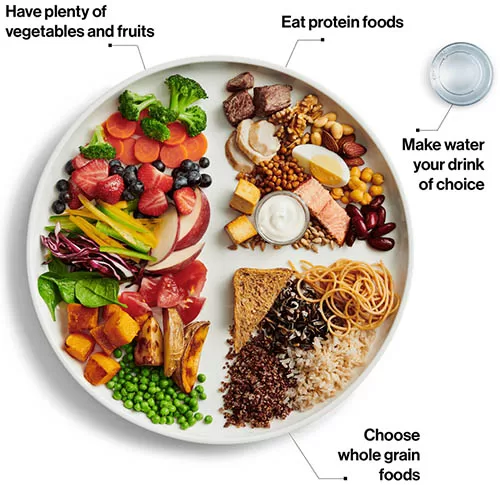
This graphic indicates that vegetables and fruits should make up about ½ of our plates, while whole grains and protein sources should each make up about 1/4. Tofu,legumes, nuts and seeds are featured as the plant-based protein options.
2. Find your protein sources
Plants have protein and are generally low in saturated fats and have, at most, very little cholesterol. Evaluate where you usually source your protein. In many cases, animal-based proteins are bundled with high levels of saturated fats which negatively impact our cardiovascular systems and may contribute to the development of some cancers; fish are all too often laden with heavy metals, especially mercury. Among the benefits of plant-based foods such as legumes and tofu for protein are the many associated positive health effects. They also generally come with a good amount of fibre, a dietary component that is sorely lacking in our diets; on average, Canadians get only 50% of the amount recommended in the Health Canada guidelines.
We sometimes hear concerns about plant foods being contaminated with pesticides and fertilizers. This may be true but if this is a concern, the situation is more extreme for the animals who eat much more plant material than us, concentrate pesticides in their body fats, and secrete them in their milk. Consuming the plants directly means we actually consume less of these contaminants than we do when we eat animal products.
3. Eat enough calories
One mistake many people make when eating plant-based is not realizing that while plant foods are nutritionally dense, they tend to be calorie-light. You generally need to eat larger portions of food when you’re consuming plants to get the same calories; though this does not hold true if you’re eating comfort foods like french fries and veggie burgers. A registered dietitian familiar with plant-based diets might also have some useful pointers on making sure you’re eating enough.In general, vegetables can make you feel satiated if you’re eating the right quantity and proportions. The trick is also to maintain a healthy balance of carbohydrates, proteins and fats. Fortunately, it’s not hard to find help with this online. The Vegan Society, for example, offers useful meal planning advice; Healthline offers a similar resource.
4. Start slow
If a sudden switch to a vegan diet seems too daunting, why not start by replacing a meal a day and work from there? The Internet is your friend when it comes to plant-based recipes. There are many great food ideas from across cuisines and the number of vegan food recipe creators is growing every day. Most recipes can be easily veganised using substitutes which are quite widely available. Start with recipes you really enjoy and then find alternative ways to cook them. You might be surprised and the dish might be healthier!
5. Be open to new tastes and sensations
Often people complain about how they will ‘miss’ one taste or another. You’ll likely find it very helpful if you get out of this mindset and look at all you can gain in making the switch. There are so many new and creative dishes just waiting for you to discover, from so many cultures around the world, so many flavors to enjoy. Once you begin to experiment, you’ll likely discover that your tastes start to change; you’ll appreciate so many new sensations.
You may also notice the difference in how your body feels when you’re increasing your intake of plant-based meals over time. If you eat a primarily whole foods, plant-based diet, you may well feel lighter, less full and less bloated. Plants have way more power than you may think!
With Veganuary upon us, don’t delay the decision. Keep these tips in mind and let’s do this together!
Note: We’ll also be posting resources on our Instagram channel to support your journey, so make sure you follow us there. You are always welcome to reach out to us with any questions/suggestions.

About Anita Bora
Anita is a lifelong adventurer who enjoys the outdoors, nature and a challenging hike. She moved from sunny California to rainy Vancouver in July 2022. She turned plant-based in 2019 and vegan soon after learning about the horrors of animal agriculture. She credits this switch for alleviating health concerns. The book that added to her resolve is Melanie Joy’s, ‘Why we pet dogs, eat pigs and wear cows‘ – she highly recommends it to learn more about carnism and cognitive dissonance. Her day job is in content and communications but she’s usually found in the ceramics studio, playing pickleball or dreaming of her next trip. She’s working on launching plant-forward tours to India; having experienced some wonderful culinary and cultural experiences on her recent trips. You can find her plant-based adventures frequently on IG (@anitabora) and (@thekindertravelco).