When it comes to dairy, there is a very common misconception out there. It’s the idea that unlike meat production, which obviously requires an animal to be killed, other animal products like cow’s milk can be produced without harm. “The animals get to live.” “I can enjoy a glass of milk or piece of cheese without any animal being hurt.”
Several months ago, my colleagues and I set out to explore the factual basis for this apparent misconception that raising cattle for meat is more harmful than raising them for dairy. As I explain below and as our study confirmed, while this line of reasoning might seem logical at first, it turns out to be not just fatally flawed, but backwards! How can this be?
First, the facts
Let’s start with some basic mammalian biology that is often overlooked. For a female mammal to produce milk, she of course needs to first become pregnant. Impregnation of dairy cows is commonly carried out using artificial insemination, a procedure that requires sperm to be collected from a bull and then manually inserted into a restrained cow, through a process that involves both rectal and vaginal intrusion.
The pregnancy lasts about 9 months. If born female, both dairy and beef calves will be raised to be repeatedly impregnated to produce new calves. If born male, they will be fattened and slaughtered at a premature age (that is, if the former are not considered surplus product and culled shortly after birth). The main conceptual difference between dairy and beef production systems concerns the milk produced by the female mother cows (“dams”), and the implications of its production and collection on the animals and their management.
Long-term genetic selection for high milk yield in dairy cows has been recognised as a major factor causing poor welfare because it is associated with health problems, such as lameness, mastitis, reproductive disorders and metabolic disorders.
Common housing and husbandry procedures for dairy cattle increase the welfare risks further. For example, while beef calves are commonly allowed to suckle milk from their mothers, dairy calves are separated from their mothers shortly after birth so that milk can be collected daily, several times a day, for human consumption. Understandably, separating a mammal from its offspring at such an early age has clear welfare implications for both sides of the dyad, especially when considering the conditions and management of the animals following the separation. For instance, upon separation, dairy calves are often kept in social isolation for several weeks (i.e. limited or no physical contact with their dam and other calves), a management practice that has been repeatedly shown to inflict behavioural and developmental harm on the animals.
As I will discuss below, our study suggests that the greater intervention in the lives of dairy cattle (raised for both their meat and milk), compared to beef cattle (raised solely for their meat), has a substantial negative effect on the welfare of both the dams and their calves in the dairy industry.
The study
The study was undertaken by myself, working at the University of Copenhagen in Denmark, and several of my colleagues, working in the Netherlands, United Kingdom, and Germany.
We were interested in comparing the welfare of animals in dairy and beef herds, when raised using the most common production methods. Our hypothesis was that the welfare of dairy cattle is lower than that of beef cattle due to the higher level of (negative) human intervention in their lives.
To explore this hypothesis, we recruited 70 leading bovine welfare experts from Europe (35), North America (17), South America (8), Australia (5) and other regions of the world (5). The experts, with a median experience of at least 15 years, were asked to rate the likelihood of beef and dairy cattle experiencing a compromise to their basic health and functioning, affective states, and ability to engage in natural behaviours when raised in the most common production systems. The assessment provided by the bovine experts clearly showed that dairy cows are more likely to experience worse welfare than their counterparts in beef herds.
The study investigated twelve areas of potential welfare concern:
- Inadequate diet
- Inadequate water supply
- Thermal discomfort
- Resting discomfort
- Injuries
- Disease
- Inability to move freely
- Pain
- Limited ability to express social behavior
- Limited ability to express other normal behaviors
- Negative affective states
- Limited ability to experience positive affective states
The higher welfare risk in the dairy sector was not limited to dairy cows—defined from first calving onwards—but also, to their calves. Experts rated the welfare risk of calves originating from dairy herds to be higher than that of calves originating from beef herds, regardless of the production goal, be it for red meat, veal, or to replace the dam. These findings contradict a very long and widely held belief in our society about the impact of dairy production on the welfare of cattle.
What about organic/free-range products?
Our study focused on the most common production systems, but similar contrasts between dairy and beef cattle are expected even if the best-known “welfare” conditions are provided to the animals. This is because animals in dairy herds are used for more than their meat, and this has implications for the experiences of the cows and their calves.
Keeping dairy cows together with their calves (i.e. dam-calf dairy operations), with free access to pasture or simply providing them with pain relievers when needed may certainly improve their current welfare state, at least to some extent. Nevertheless, raising beef cattle in similar improved conditions (i.e. solely for their meat), is expected to compromise their welfare to an even lesser degree.
Making a difference for animals
With a projected 20% increase in global milk production by 2029, the highest among all livestock commodities, the toll of milk production on animals in the dairy industry may require a thorough revision of our current societal, political and moral decisions.
Decisions we make day to day as consumers can make a difference. The next time you walk down an aisle of cooled food products at your local supermarket, or check the food menu of a local coffee shop, consider these two points:
1. Dairy production = meat + milk production.
2. Animals raised for dairy production suffer worse welfare conditions than those raised solely for their meat, regardless of whether they are raised for their meat or milk.
As a consumer understanding the facts above, you can choose to support one production system, both, or neither of the two. I hope that our study will raise awareness to the link between dairy and meat production, and finally put to rest the myth that dairy production causes less harm to animals than beef production.
For the full study (open access): Dairy vs beef production – expert views on welfare of cattle in common food production systems – ScienceDirect.
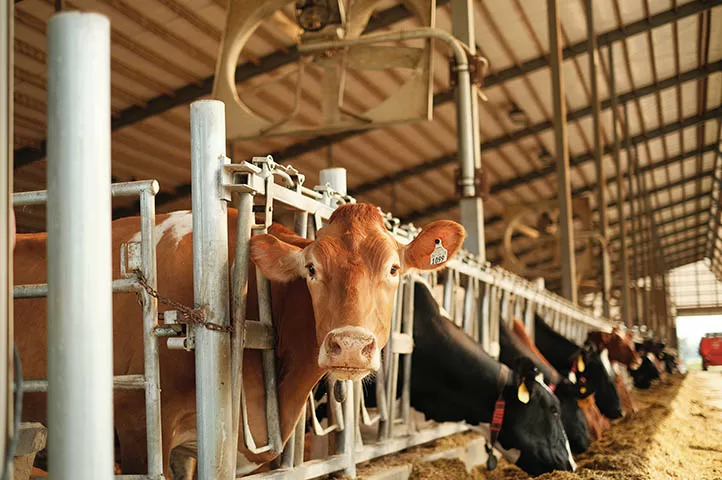
Photo by Austin Santaniello on Unsplash