• Why Plant-Based?
    • Overview
    • Sustainability
    • Better health
    • Compassion for animals
  • Resources
    • Virtual speaker series
    • Speakers program
    • Pamphlets
    • Newsletters
  • Blog
  • About Us
    • Who we are
    • Contact us
  • How to Help
    • Join us
    • Donate
  • Subscribe to Newsletter
Earthsave CanadaEarthsave Canada
  • Why Plant-Based?
    • Overview
    • Sustainability
    • Better health
    • Compassion for animals
  • Resources
    • Virtual speaker series
    • Speakers program
    • Pamphlets
    • Newsletters
  • Blog
  • About Us
    • Who we are
    • Contact us
  • How to Help
    • Join us
    • Donate
  • Subscribe to Newsletter

Speakers Program

Are you looking for well informed people to speak to your class, group or organization? We have you covered. We can provide you expert speakers on the effects our food choices have on the world.

Our lectures are adaptable to fit different age groups and can be part of many different subjects ranging from geography, agriculture, animal welfare, health and nutrition, personal studies and more.

We aim to create a safe space in which we welcome and encourage students to ask questions and engage with the lecturer. We hope to inspire and empower your students to create a sustainable future with less animal suffering and better health for all.

We appreciate that subjects such as this can be sensitive and we are happy to work with you to agree upon the type of material discussed, we are not here to scare or shame, our approach is factual and science based. However, we have also given lectures on the psychological and compassionate values of plant based diets which has received wonderful feedback.

If you are interested in having us give a talk at your school please get in touch with any questions or concerns and we will be happy to discuss how our lectures could help inspire your students and create a better tomorrow.

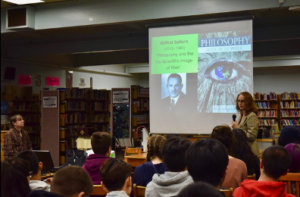
David Steele

David is a molecular biologist retired in 2013 from the Faculty of Medicine at the University of British Columbia. He has also held faculty positions at Cornell and Queen’s Universities.

Dr. Steele’s talks focus on the evidence we have on the environmental effects of our food choices as well as the medical evidence we have about the effects of our dietary choices on ourselves. The effects of our choices on the lives of farmed animals are also discussed.

Donate

Recent Posts

  • A Critical Look at the WRI’s Recent GHG Source Assessment
  • Beyond the protein myths: why plant-based protein deserves a place on your plate
  • A Tale of Two Santa Martas
  • United Nations Environment Program: The World is In Grave Danger – But We Can Save It … and Thrive!

Follow us

Engage with us on facebook

Earthsave Canada

1 day 3 hours ago

"Elephants used 41 gesture types (derived from 32 gesture actions) to communicate two main goals: “Move away” and “Stop behaviour”. The gesture types used by

Elephant gestural communication during agonistic interactions: repertoire, intentionality, and goals - Animal Cognition

Goal-directed intentionality is the ability to communicate with the intention of eliciting reactions from recipients. Long considered uniquely human, today it has been reported in the signalling of several species, most notably in the large, flexible gestural repertoires of non-human apes. Semi-capt...

1
View on Facebook
Share
Earthsave Canada

Earthsave Canada

1 day 5 hours ago

Overall, the land we'd be using to feed ourselves would be just a fifth of what we're using now. 80% could be 'rewilded,' allowed to

1
View on Facebook
Share

Earthsave Canada

1 day 8 hours ago

Factory farms are massive crimes against nature. "Iowa is the U.S. state with the most factory farms: 10,830 of them, to be exact. The massive

Iowa Has a Staggering 11,000 Factory Farms and Their Manure Is Fueling a Growing Water Crisis

Iowa is the U.S. state with the most factory farms: 10,830 of them, to be exact. The massive scale of animal agriculture in Iowa produces staggering amounts of manure, more than its fields of corn, soy and other crops can absorb.

7
View on Facebook
Share

© 2026 · Earthsave Canada.