Growing crops to feed humans, instead of livestock, could help end world hunger
Global warming, it seems, is upon us with a vengeance. Most of North America baked in record heat this summer. Arctic sea ice reached its lowest level in recorded history. NASA reports that the year July 2011-July 2012 was the warmest on record. Worse, a major drought struck much of the most productive farmland in the United States and Canada. Corn and soy were hit hard. Grain prices are up 30% since May and it looks like they’re going to keep going up for quite a while yet.
The good news is that – if we and our governments act quickly and intelligently- this does not have to be a disaster for the world’s poor. If we don’t, though, the consequences could be dire. As the UN Food and Agriculture Organization, the International Fund for Agricultural Development, and the World Food Program jointly noted on September 4th, “We need to act urgently to make sure that these price shocks do not turn into a catastrophe hurting tens of millions over the coming months…We are vulnerable because even in a good year, global grain production is barely sufficient to meet growing demands for food, feed and fuel – this, in a world where there are 80 million extra mouths to be fed every year. We are at risk because only a handful of nations are large producers of staple food commodities, and when they are affected, so is everyone else.”
The UN is asking first and foremost that our governments rethink their biofuel policies, that they prioritize food for humans over fuel for automobiles. The request makes sense. Over 30% of the Canadian corn crop and 40% of the US corn crop now go to biofuels. Much of soy, too, is being similarly diverted. Clearly, in this time of imminent famine, this has to stop. If we follow the UN’s advice, this action alone will likely be enough to prevent mass famine in the coming year. In the long run, though, it won’t be nearly enough.
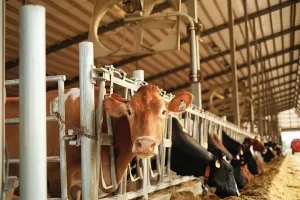
Biofuels are only part of the problem. Animal agriculture is similarly wasteful. About the same amount of corn goes into the mouths of farm animals as goes to biofuels. For soy, something likely 80% is fed to the animals. This is tremendously inefficient. On average, about 6 pounds of plant protein are required for every single pound of animal protein we get back.
As scientists at Cornell University and elsewhere have shown, we could feed hundreds of millions more people on U.S. grain alone if it was fed directly to humans instead of to farm animals. With the world population trending towards 9 billion by mid-century, it seems awfully unlikely that we’re going to be able to feed ourselves if we insist on making biofuels, meat and other animal products out of the grain
we grow. And it’s not just the grain we’re wasting. It’s precious water, too. All of this diversion of grain and soy to animals and biofuels is putting enormous stress on the world’s water supplies.
Scientists at this year’s World Water Conference put the problem in stark perspective: “There will not be enough water available on current croplands for the expected 9 billion population in 2050 if we follow current trends and changes towards diets common in western nations,” the report from the Stockholm International Water Institute said.
The scientists pointed out that animal-based foods consume 5 to 10 times as much water as do vegetarian foods. “With 70% of all available water being [used] in agriculture, growing more food to feed an additional 2 billion people by 2050 will place greater pressure on available water and land,” the Stockholm scientists said. Newspaper reports around the world flashed their prediction: Food shortages will likely force the world to go vegetarian by 2050.
The good news is that if we were to collectively drop animal products from our diets, we could feed our burgeoning population with ease – from a lot less land than we’re using now. So why not do it? It’s easy. And it’ll save many, many lives. There are lots of resources available to help you. Check out our website, www.earthsave.ca and check out some of the excellent vegan recipe sites out there. Google the Vegan Feast Kitchen, Mouthwatering Vegan or the Post Punk Kitchen for starters.
Please remember that we are fortunate enough to live in a democracy, and that your voice matters. Write the Prime Minister, your local MPs and other levels of government. Lobby them to take emergency action this year on biofuels and other issues that concern you. There is so much at stake, we cannot afford to stand by and watch. We must act now.
David Steele is a Research Scientist in the faculty of medicine at UBC. He holds a Ph.D. is in Genetics and Molecular Biology from Emory University, in Atlanta. He is also the current president of Earthsave Canada.