

• Why Plant-Based?
    • Overview
    • Sustainability
    • Better health
    • Compassion for animals
  • Resources
    • Virtual speaker series
    • Speakers program
    • Pamphlets
    • Newsletters
  • Blog
  • About Us
    • Who we are
    • Contact us
  • How to Help
    • Join us
    • Donate
  • Subscribe to Newsletter
Earthsave CanadaEarthsave Canada
  • Why Plant-Based?
    • Overview
    • Sustainability
    • Better health
    • Compassion for animals
  • Resources
    • Virtual speaker series
    • Speakers program
    • Pamphlets
    • Newsletters
  • Blog
  • About Us
    • Who we are
    • Contact us
  • How to Help
    • Join us
    • Donate
  • Subscribe to Newsletter

A Critical Look at the WRI’s Recent GHG Source Assessment

A Critical Look at the WRI’s Recent GHG Source Assessment

A Critical Look at the WRI’s Recent GHG Source Assessment

August 28, 2026 Posted by David Steele

Recently, the World Resources Institute (WRI) released a report which they say quantifies the sources of greenhouse gases in the atmosphere (1). Strangely, they cite no studies within it and some of the values they provide differ substantially from those determined in careful studies conducted by others.

Farming, for example, is responsible for far more than the 12.3% of global warming that the WRI claims for it. Study after study indicates that agriculture is responsible for at least a quarter of that warming (see reference 2, which links to many more). If we count methane’s effects over its lifetime in the atmosphere, instead of averaging it over 100 years, it goes even higher than that (3).

Methane emitted today will be mostly gone just 12 years from now, but it is constantly being replenished, making it very reasonable to consider its instantaneous effects, not those from an imaginary disappearance of the gas from the atmosphere. Indeed, methane levels are rising, not falling (4).

We note, also, that the bulk of GHG emissions from agriculture come from animal farming, the growing of feed to support farm animals and deforestation and land use changes necessary for that industry (5).

It is possible that the WRI is estimating only direct emissions, ignoring the myriad other means by which agriculture, for example, contributes to global warming. Their wording indicates otherwise, though.

The methodology they are using should be much more clearly described. As written, their assessment is likely to lead people to seriously underestimate the need for dietary change in mitigating global warming and to make other errors, as well.

So, when you’re considering the effects of agriculture on the climate – and other aspects of the environment, don’t rely only on a single source. Check around and work from sources that reflect and cite a wide variety of high quality studies. Our World in Data* (see reference 2 below), will help you do that! You’ll then be able to form a picture of the subject you’re investigating that more closely reflects the reality of the situation.


1.https://www.wri.org/insights/4-charts-explain-greenhouse-gas-emissions-countries-and-sectors

2. https://ourworldindata.org/environmental-impacts-of-food

3. https://www.unep.org/news-and-stories/story/methane-emissions-are-driving-climate-change-heres-how-reduce-them

4. https://gml.noaa.gov/ccgg/trends_ch4/

5. https://www.science.org/doi/10.1126/science.aaq0216

*Our World in Data is a rigorous online scientific compendium that focuses on large global problems including poverty, disease, and climate change.The research team is based at the University of Oxford.

Share
Avatar photo

About David Steele

David is a molecular biologist retired in 2013 from the Faculty of Medicine at the University of British Columbia. He has also held faculty positions at Cornell and Queen’s Universities. Dr. Steele is a frequent public speaker and a regular contributor to Earthsave Canada's publications. He is also an occasional contributor to various other publications.

You also might be interested in

BC phases out mink farming

BC phases out mink farming

Nov 24, 2021

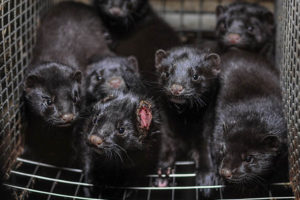
Earlier this month, BC announced it would phase out its mink-farming industry. This blog examines the harms caused by this industry, including the spread of diseases like COVID-19, and provides suggestions for taking further action against commercial mink farming.

The world needs more vegans: a roundup of a tumultuous year

The world needs more vegans: a roundup of a tumultuous year

Dec 15, 2020

Remember, we didn’t all come together and decide that eating a diet heavy in animal products is a good idea. A lot of factors got us to where we are, but for most of us, we just grew up eating what our parents gave us and continued with a similar pattern in adulthood because that’s what we knew.

We’ve outgrown omnivorism

We’ve outgrown omnivorism

May 10, 2016

By David Steele and Denise Swanson Many question whether humans[...]

Donate

Recent Posts

  • A Critical Look at the WRI’s Recent GHG Source Assessment
  • Beyond the protein myths: why plant-based protein deserves a place on your plate
  • A Tale of Two Santa Martas
  • United Nations Environment Program: The World is In Grave Danger – But We Can Save It … and Thrive!

Follow us

Engage with us on facebook

Earthsave Canada

Earthsave Canada

18 hours 58 minutes ago

"Luckily, it is possible to get all that same delicious crab taste and texture using just plant-based ingredients. We’re looking at jackfruit, hearts of palm,

View on Facebook
Share
Earthsave Canada

Earthsave Canada

1 day 6 hours ago

"Studies showed that honeybees can count up to at least four objects and understand the concepts of greater than and less than. They can even

7
View on Facebook
Share
Earthsave Canada

Earthsave Canada

1 day 9 hours ago

Like animal agriculture, biofuels do immense harm. "The two fastest-growing global uses of food crops are their conversion into biofuels and their use as livestock

3
View on Facebook
Share

© 2026 · Earthsave Canada.