
Time is running out to prevent catastrophic global warming
The Intergovernmental Panel on Climate Change (IPCC) has released their latest assessment of where we stand on global warming. And it is somber.
“Climate change is widespread, rapid and intensifying,” warns their August 9th press release. “It’s a code red for humanity,” warns another press release. Ominously, that release states that “time is running out” for us to prevent catastrophic warming. Yet – clearly – we must prevent it!
Fortunately, Panmao Zhai, the co-chair of the working group that produced the IPCC report gives us a prescription for doing just that: “Stabilizing the climate will require strong, rapid, and sustained reductions in greenhouse gas emissions, and reaching net zero CO2 emissions. Limiting other greenhouse gases and air pollutants, especially methane, could have benefits both for health and the climate,” she tells us.
As the IPCC outlines in Chapter 5 of the report, implementing the latter part of that prescription would be particularly effective in rapidly slowing warming.
Methane emissions must be dramatically reduced
Methane is an extremely potent greenhouse gas. Over its lifetime in the atmosphere, it has about 100 times the heat-retaining power of carbon dioxide, molecule for molecule. Its effects are now known to be substantially greater than they were estimated to be just a few years ago. Indeed, while it makes up only about 3% of global warming gases in the atmosphere, this gas is estimated to be responsible for about 23% of the actual warming we’ve experienced since 1750. Averaged over 20 years, methane is about 86 times as potent a global heating gas as is carbon dioxide.
The good news is that methane doesn’t last long. Just 12 years after being emitted, methane molecules have mostly oxidized in the air to form carbon dioxide and water. Thus, if we were to rapidly reduce methane concentrations in the air, we’d also rapidly slow global warming – far faster than we can with similar reductions in CO2, a gas that persists for 300 to 1000 years before being finally sequestered in dead biomass and rock.
In the past, the IPCC has averaged methane’s effects over 100 years which led to an underestimation of its effects in the real world. If methane concentrations were dropping, that long term averaging might have made sense, but methane concentrations are not dropping. They are rising. Indeed, since 1750, methane concentration in the atmosphere has increased roughly 2.5-fold from about 722 parts per billion (ppb) to over 1800 ppb in 2011. As of April of this year, it had risen to 1891 ppb.
In light of this, the IPCC scientists have changed their approach. Instead of worrying about precisely how much warming a new molecule of methane will be responsible for, they’ve looked backwards. They’ve focused more on the cumulative effects that methane has already had on planetary temperatures. They’ve further estimated how reductions in atmospheric methane today would slow temperature rise over the coming decades. Done right, the benefits would be very substantial. “Strong, rapid and sustained reductions in methane emissions would also limit the warming effect resulting from declining aerosol pollution,” the scientists note.
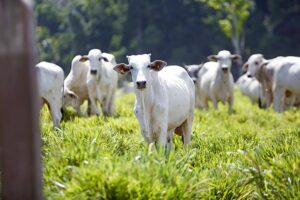
Best of all, reducing methane in the atmosphere is one of the easiest things we can do to counter global warming. Major sources include leaks from oil and gas rigs, fracking, and – more than any other single source – agriculture; animal agriculture being the main contributor to that.
A global shift to vegan diets is a critical step
Reading the scientific literature on this to tease out precise contributions is a little confusing because different authors use different models and timelines over which to estimate the effects of methane. What is easy to discern, though, is that the contribution of animal agriculture is huge. Some 20% to 31% to perhaps 40% of methane emitted each year from human-related sources comes from animal agriculture.
All of this can be dealt with.
Strong regulation of oil, gas and coal extraction, combined with the necessary winding down of the fossil fuel industry will go a very long way. It is critical to stem the flow of CO2 into our air – which, the IPCC asserts, must soon fall to net zero. Amazingly, just the same, moving rapidly towards worldwide vegan diets would accomplish even more immediate good.
Going collectively vegan – or getting as close to it as we can – would not only eliminate the biggest source of methane emissions, it would dramatically reduce levels of nitrous oxide, another extremely potent greenhouse gas. This is because we’d need much less fertilizer if we stopped inefficiently feeding crops to animals and because manure, another major source of the gas (and of methane) would no longer be around in enormous quantities.
Even better, removal of CO2 from the atmosphere could be dramatically accelerated. Because the vast majority of farmland is used to raise farmed animals and the crops that feed them, large swaths of that land could be rewilded – that is, they could be returned to forest and other natural vegetation. An important study, published last fall, showed that restoring just 30% of agricultural land to the wild would allow the sequestration of half of the carbon we have poured into the atmosphere since 1750.
Of course, if the whole world went vegan, we could rewild much more than just 30% of farmland.
The recent IPCC report is somber. We need to rapidly slash our emissions of carbon dioxide, methane, and other greenhouse gases. But the report also offers hope. We can rise to the challenge. Going vegan is one of the most powerful ways to do it. So let’s do it. And let’s advocate for it within our communities – and, especially, with all levels of government. The future is in our hands.
Photo by Cherry Laithang on Unsplash