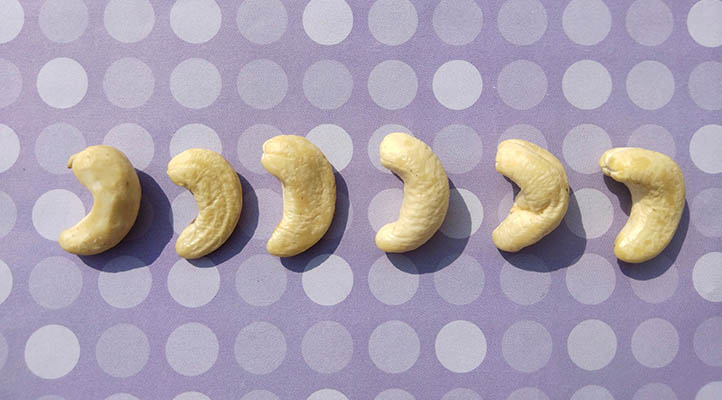
Cashews are often used to create vegan cheeses, and for good reason. Cashews make for a wonderful dairy alternative that can be used in a variety of recipes and are popular in cream sauces, cheeses and desserts. Often, the creamiest and dreamiest of vegan cheeses are made with them. Aside from their utility in vegan baking and cooking, they’re also packed with fiber, heart-healthy unsaturated fats, and nutrients like copper, manganese, magnesium, and zinc.
Cashews are also an environmentally friendly alternative to dairy products. Dairy products contribute substantially to greenhouse gas emissions due largely to the methane emissions associated with cows’ digestive processes and to the land base required to produce livestock feed. Not to mention the considerable amount of water that goes into every stage of dairy production.
But what about the ethics? Many vegans eat a plant-based diet for ethical reasons, and note issues like abuse, exploitation, and the violence of animal slaughter. It may seem straightforward to most, that because cashews are seeds, they’re inherently ethically harvested. This is unfortunately far from the truth. The human dimension of food production is critically important, and relevant, when considering the impacts of cashews.
Children in Vietnam and India are forced to forgo an education to engage in the shelling process due to soaring demand for cashew nuts.
An article by ImpACT International notes that the most vulnerable groups like inmates, drug users, women and children in countries like Vietnam and India are forced into the cashew production process. Children in Vietnam and India are forced to forgo an education to engage in the shelling process due to soaring demand for cashew nuts. The article notes that 168 million children are estimated to be working in the industry. Human Rights Watch released a report in 2011 which found that drug users in Vietnam were forced to shell cashews at so-called “treatment” centers.
The health impacts on workers in the cashew industry are appalling. Shelling the cashew nuts is an arduous and painful process. The shells contain anacardic acid and cardol, often resulting in painful burns and injuries to the hands and eyes, and those who are forced into the industry are often not supplied with the proper supplies to prevent burns.
Cashews produced under the Fairtrade certification ensure that the social costs of the product are integrated into the price, resulting in safer working conditions.
So, what now? As vegans, it’s hard to ignore the human dimension of agriculture, and we certainly shouldn’t. Boycotting the cashew industry could also be harmful, potentially taking employment away from communities that genuinely need it. Purchasing Fairtrade cashews is a productive way to vote with your dollar, for those who can afford to do so. Beyond the Nut notes that cashews produced under the Fairtrade certification ensure that the social costs of the product are integrated into the price, resulting in safer working conditions. Employees are provided with vegetable oil to prevent burns, and shells undergo a heating and cooling process to reduce the risk of acid exposure. The Fairtrade label also supports a more equitable supply chain by ensuring farmers receive a reasonable price for their products by engaging local communities in both the production and processing of cashews.
Unfortunately, the availability of Fairtrade cashews in Canada is limited. According to the Fairtrade purchasing guide, there’s only one supplier in Canada, and they’re located in Quebec, though they offer shipping to other provinces. Another solution, and perhaps more cost-efficient, is to use alternatives to cashews such as sunflower seeds, chickpeas, walnuts, and silken tofu. Pine nuts are also a great option and are wonderful in vegan cream sauces, though due to their high cost they might be reserved for special occasions!
It’s almost impossible to avoid products that cause human suffering in our globalized world, but purchasing Fairtrade is a step in the right direction, and applies to other plant-based products as well like coffee, chocolate, and bananas. The social costs of agriculture are vast, including the curious case of cashews. Purchasing Fairtrade or using alternatives to cashews is a step in the right direction to alleviating the human suffering associated with cashew production.