
• Why Plant-Based?
    • Overview
    • Sustainability
    • Better health
    • Compassion for animals
  • Resources
    • Virtual speaker series
    • Speakers program
    • Pamphlets
    • Newsletters
  • Blog
  • About Us
    • Who we are
    • Contact us
  • How to Help
    • Join us
    • Donate
  • Subscribe to Newsletter
Earthsave CanadaEarthsave Canada
  • Why Plant-Based?
    • Overview
    • Sustainability
    • Better health
    • Compassion for animals
  • Resources
    • Virtual speaker series
    • Speakers program
    • Pamphlets
    • Newsletters
  • Blog
  • About Us
    • Who we are
    • Contact us
  • How to Help
    • Join us
    • Donate
  • Subscribe to Newsletter

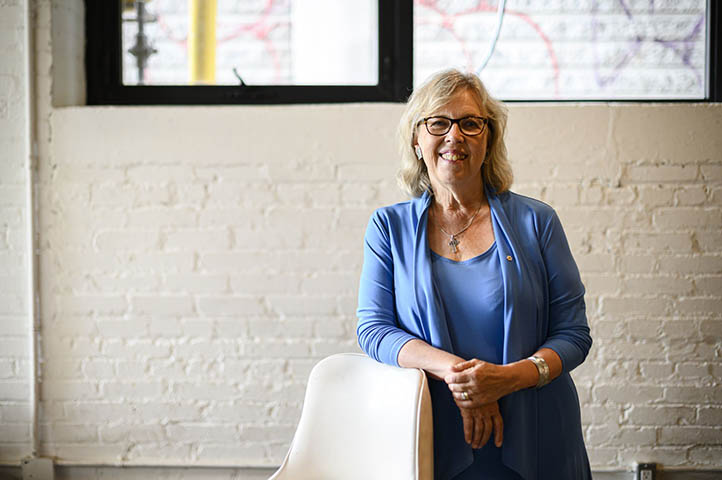
Plant-based Transitions: Green Party Leader Elizabeth May

Plant-based Transitions: Green Party Leader Elizabeth May

Plant-based Transitions: Green Party Leader Elizabeth May

July 11, 2016 Posted by Guest Author

There are so many solid reasons to become vegetarian – eating lower on the food chain to solve the spectre of mass starvation (Frances Moore Lappé’s reason in Diet for a Small Planet), health reasons in avoiding animal products (well-explained by my friend and Green Deputy leader Georges Laraque who is ahead of me and fully vegan), concern for the greenhouse gases emitted in meat production and concern for animal rights.

My own reasons seem childish in retrospect, but on the other hand, I was a child when, 48 years ago, I decided to stop eating meat.

I grew up on a wonderful 7-acre property, with wetland and forest and space for a hobby farm. We had ponies and a donkey and chickens, and then sheep.

I was eight years old when I had pet lambs. Without even thinking about it, I realized I could no longer eat lamb. I can remember feeling guilty patting a cow’s velvety nose and realizing I was still happy to eat burgers.

The decision to stop eating any meat or poultry was immediate and prompted by going, at age 10, with my mother and little brother to see “Bambi.” After the movie, I sat in the car, still parked in the parking lot, crying about Bambi’s mother being shot. I was so angry at hunters, but my mother reminded me that my aunt and uncle were hunters. “Besides,” she said, “you cannot criticize hunters as long as you eat what they shot.”

That was that. I decided to never eat meat again. Sometimes I think it was a sign of my future career as a lawyer – not wanting to lose an argument on a technicality.

As a child, I was the only person I knew who was vegetarian. It led to being tormented in school and having events with nothing available for lunch. I was excited to find that George Bernard Shaw was a vegetarian and even more thrilled when I read in TV Guide that Tina louise, who played Ginger on “Gilligan’s Island” didn’t eat meat. It is glorious living in a society where being a vegetarian is considered normal!


Share

About Guest Author

Guest authors contribute to Earthsave Canada, but are not members of the board.

You also might be interested in

Veganism and stand-up comedy

Veganism and stand-up comedy

Sep 29, 2020

I’ve compiled some vegan stand-up routines for some comic relief during these difficult times. Comedy can play a critical role in temporarily relieving pressures of grief and melancholy, whether about job loss, being stuck indoors, loss of loved ones, the inhumane treatment and mass killing of animals, living through a global pandemic, or missing friends and family overseas.

Search Engine online shopping hacks for vegans

Search Engine online shopping hacks for vegans

Jul 21, 2020

By purposely including or excluding certain terms from your search, you can better cater the results to vegan desires.

CBC’s coverage of plant-based issues is all too often outrageously flawed

CBC’s coverage of plant-based issues is all too often outrageously flawed

Feb 22, 2024

Our national broadcaster is doing serious public harm by misinforming us about the importance of and the science behind moving to plant-based diets

Recent Posts

  • Scientists Across the World are Taking Major Personal Actions to Combat Global Warming
  • A Critical Look at the WRI’s Recent GHG Source Assessment
  • Beyond the protein myths: why plant-based protein deserves a place on your plate
  • A Tale of Two Santa Martas

Follow us

If you found this helpful please consider donating.

Donate

Engage with us on facebook

Earthsave Canada

17 hours 58 minutes ago

""The year of the fire gave us a unique opportunity: We were able to observe how the animals react when a normally reliable food source

Guinea baboons respond flexibly to changing environmental conditions

Climate change is affecting the environmental conditions of wildlife around the world: Rising temperatures, changing precipitation patterns and more frequent extreme weather events can lead to important food sources becoming unavailable, at least temporarily. How well animals cope with such changes....

2
View on Facebook
Share

Earthsave Canada

19 hours 58 minutes ago

"The crops we feed farm animals like soy and corn are a big part of the meat industry’s massive environmental footprint. Producing these crops accounts

The Hidden Mining Cost of Meat and Seafood

Most life-cycle assessments of meat, dairy and fish leave out the minerals added to feed.

View on Facebook
Share

Earthsave Canada

22 hours 48 minutes ago

"Not eating red meat appears to yield modest but measurable cardiometabolic benefits." ----- "Alpha-gal syndrome, a tick-borne allergy to mammalian meat, leads to an abrupt

The Health Effects of Eating Red Meat: A Natural Experiment in Alpha-Gal Syndrome

Founded in 1920, the NBER is a private, non-profit, non-partisan organization dedicated to conducting economic research and to disseminating research findings among academics, public policy makers, and business professionals.

1
View on Facebook
Share

© 2026 · Earthsave Canada.