
VEGAN 2020 is the sixth installment of a Youtube Documentary series released annually by Plant Based News. The film takes us through the year 2020 month-by-month, tracking both the tragedies and advancements within plant-based trends over the course of the global COVID-19 pandemic.
Film Overview
Environmental Issues
VEGAN 2020 highlights environmental catastrophes that occurred, like massive wildfires in Australia and the USA, which are linked to climate change. Animal agriculture contributes greatly to climate change through emissions from animals directly, growing feed for animals, and deforestation to grow that animal feed, to name a few.
Animal Agriculture & Zoonotic Viruses
VEGAN 2020 explains how the COVID-19 pandemic was caused by our desire to eat and use animals, and discusses how media coverage of the mass culling of animals made the scale of animal agriculture visible to many. It discusses the ongoing COVID-19 mutations, and how risk is still present and growing for other zoonotic viruses like swine flu and stronger flus like H7N9 Avian Influenza which could perhaps be 100x deadlier than COVID-19.
Not mentioned in the documentary are that there are worse flus that could potentially spark pandemics looming, such as the H5N1 flu with its 60% death rate, and that there would be no seasonal flu were it not for animal agriculture.
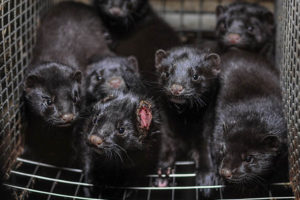
I appreciate how the film highlights society’s hypocrisy of mandating social distancing for humans throughout the pandemic while failing to address the fact that animals placed in crowded cages en masse for human consumption largely created these zoonotic pandemics in the first place.
Other Public Health Issues
VEGAN 2020 points out that public health officials, governments, and media reports have largely ignored the role that animal agriculture plays in the pandemic, with only 2.1% of 51,000 media articles published in the first month mentioning animals at all. The film compares the newly-released 2021 USDA Dietary Guidelines to the Canada Food Guide (which removed dairy entirely) and points out that antibiotic resistance is a looming threat to our global health system, with the World Health Organization cautioning that the world is heading to a post-antibiotic era.
Market Trends
VEGAN 2020 discussed Veganuary and other advancements in the food and hospitality industry, such as the addition of plant-based options in menus and the commercial advertisement of new plant-based food products. Trends indicated that animal agriculture industries are feeling threatened and fighting back against these innovations in evermore creative ways, particularly through food label lobbying. Many meat-based businesses also acquired new plant-based sectors, sometimes strangely even combining meat and plant-based substitutes for a hybrid aimed at reducitarians.
Media & Entertainment
The film highlights the recent success of other films promoting a plant-based lifestyle like The Game Changers, and how some celebrities and athletes promote a plant-based lifestyle and vegan lifestyle. For example, tennis champion Novak Djocovik now advocates an ethical vegan lifestyle in addition to just a plant-based diet.
Other celebrities, in retaliation to evidence-based nutrition claims, tried a fully-carnivorous diet, only to develop scurvy – a disease caused by vitamin C deficiency. This would have been a great opportunity to explain how humans, evolving as primates eating a diet largely of plants, need to acquire ample vitamin C from our plant foods because, unlike true carnivores, we’ve lost the ability to synthesize it ourselves.
Further Discussion
An explanation of what veganism actually is would have been helpful
The film doesn’t mention animal sentience, nor explain what veganism actually is. It may have been useful to include an explanation as to why eating animals is unnecessary for humans and inherently cruel, and how animals are deserving of moral consideration. Given the title of the film, this discussion seems appropriate and would give non-vegan viewers a clear picture of a viable solution to the issues raised. Hopefully, the title of the film will lead concerned viewers to look into veganism and find this information.
Rhetoric on ‘factory farming’ downplays the inherent harms of all animal agriculture
The documentary prominently uses the phrase ‘factory farming’ throughout, which ignores that all animal farming is inherently violent and problematic on any scale. The use of this phrase may lead viewers of this documentary to believe that small-scale farming is a solution to all the issues raised, when it surely is not. As an article by Free from Harm puts it:
“Factory farming” has come to imply that only the conditions the animals are kept in are of importance, and that taking an animal’s life, the slaughter itself, is unproblematic. The marketing experts of the animal farming industry brandish this term to make people believe that as long as it isn’t a “factory” or “industrial” setting, as long as it’s not a mega-size farm, as long as the animal had some kind of minimally “natural” or “comfortable” life, then it’s ok to slaughter the animal for the enjoyment of the “conscientious” consumer.
That said, the film took a largely science-based approach and even tackled some ‘woo’ including the ‘conspiracy’ angle that an unfortunate few are taking on the whole pandemic. VEGAN 2020 explains that if one is unfamiliar with the link between raising animals, zoonotic diseases, and epidemiology (perhaps due to the lack of media coverage around these converging issues) it may be easier to think a global zoonotic pandemic is unfeasible and come to one’s own creative conclusions. Education is key.
Conclusion
VEGAN 2020 presented a balanced picture of the vegan advancements and pushbacks faced in 2020. It was informative, ended on a positive note, and showed how plant-based diets and vegan lifestyles are no longer a fringe movement. The film emphasized that the lockdowns throughout 2020 demonstrated that humanity is capable of swift, worldwide behavioural change. Hopefully that realization will motivate us to take action to prevent pandemics, climate change, and diet-related disease risk while sparing animals by changing our food choices from animals to plants. Thanks for the excellent recap of 2020, Plant Based News!
If you’d like to watch VEGAN 2020 yourself, check it out below:
Photo by Jake Hills on Unsplash