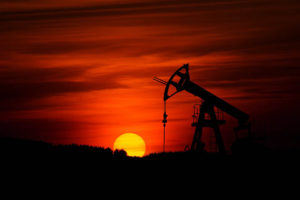
CAFOs, or Concentrated Animal Feeding Operation. Over 168 gases are emitted from CAFO waste, including hazardous chemicals such as ammonia, nitrous oxide and methane.
Kyoto revisited at United Nations conference, but food largely ignored
by David Steele
Global warming is a crisis that is slowly overtaking us. We can do something about it, but our leaders are not exactly helping. Not since before our distant ancestors spread beyond Africa some 50,000 years ago has there been such a general threat to our continued existence. Not to mention the menace – in many cases already consummated – to so very many of the species we cohabitate this planet with. Among modern threats, only mass use of nuclear weapons could compare.
This past summer, ice cover in the Arctic fell to the lowest extent we’ve ever seen; in neighboring Greenland some 97% of surface layer ice melted. In North America, last winter was extraordinarily warm.
So was the summer. It was the warmest on record in Canada. July was the hottest month ever recorded in the USA. Record-breaking storms are becoming commonplace (think Hurricane Sandy on the North American east coast and Typhoon Bopha that devastated wide swaths of the Philippines). Things do not look good. Study after study after study indicates that we’re on track for a very, very hot world. So, you’d think that our leaders would be getting scared. That there would be major action to stop this growing catastrophe. The past record is mixed but, come on, this is getting serious!
The 1997 Kyoto agreement to curb climate change was, without a doubt, a flawed agreement. There were a lot of loopholes and, even had it been fully implemented, greenhouse gas emissions would still be too high to avoid very serious warming this century.
Still, under its terms, the Europeans slashed their greenhouse gas emissions by some 18% compared to 1990 levels. Canada? Not so good. While the recession has led to a recent dip, our emissions are still about 17% higher than in 1990. Far, far above the 5.2% cut we committed to in 1997. Still, we’re not the worst. Global greenhouse gas emissions are up about 26% since 1990. Clearly, something must be done! Well, as 2013 rang in, Kyoto ran out. A December meeting in Doha was our last chance to replace Kyoto before it ended. Representatives from the many countries of the world met. An extension to Kyoto was agreed to – with all of the loopholes intact. Canada, the US and New Zealand were obfuscators, preventing a more serious attempt to stop global warming. Canada is the only country in the world to have signed and formally withdrawn from Kyoto. The USA has signed but, very probably, will never ratify. There is reason to despair. But there is good news. If we become an awake and ethical population, we can stop this disaster pretty much on our own.
How? For starters, keep your driving to an absolute minimum. And don’t fly. That’ll help. Especially if we all do it. Transportation is one of the biggest contributors to global warming. Turn your thermostat down and keep your electrical usage down too. And even more important, drop animal products from your diet! Although it was essentially ignored in Doha, animal agriculture is just about the biggest single contributor to global warming that there is. In 2006, the United Nations Food and Agriculture Organization (FAO) pegged animal agriculture’s contribution to global warming at 18%, well above all of the cars and trucks and planes and trains in the world, combined! And the FAO’s estimate is low. They averaged methane’s effects over 100 years instead of over its roughly 20-year lifespan in the atmosphere (the majority of human-related methane emissions come from animal agriculture). Correct that and their number jumps to 24%, a value very similar to the 25% cited last October by the United Nations Environmental Program.
Clearly, if we collectively drop meat, eggs and dairy from our diets, we’ll slash global warming emissions by far more than Kyoto ever envisioned – and quickly. We can’t realistically expect our governments to take the actions that must be taken to prevent a global warming catastrophe. But we can do it. A mass movement away from animal products – boosted by a movement away from driving and flying, etc. – could rapidly accomplish the change that we need. And that change would come with an end to a great deal of horrible cruelty, not to mention drastic reductions in a whole lot of other pollutants. So learn and take action. If we’re going to tackle this terrible problem, we’re going to have to act, AND SOON!. Let’s work together and make this a mass movement. We can change the world very much for the better.
David Steele is a Research Scientist in the faculty of medicine at UBC. He holds a Ph.D. is in Genetics and Molecular Biology from Emory University, in Atlanta. Dave is also the current president of Earthsave Canada.
MAKE CONTACT.
SHARE YOUR CONCERNS & SOLUTIONS:
United Nations: http://www.un.org/en/contactus/
Canada’s Minister of the Environment – Peter Kent Minister@ec.gc.ca
10 Wellington St. 28th Fl. Gatineau, QC K1A 0H3
BCs Environment Minister – Terry Lake env.minister@gov.bc.ca
PO BOX 9047 STN PROV GOVT VICTORIA BC V8W 9E2
The City of Vancouver’s Environment Chair
City Councillor Andrea Reimer clrreimer@vancouver.ca
Vancouver City Hall 453 West 12th Ave Vancouver, BC V5Y 1V4