• Why Plant-Based?
    • Overview
    • Sustainability
    • Better health
    • Compassion for animals
  • Resources
    • Virtual speaker series
    • Speakers program
    • Pamphlets
    • Newsletters
  • Blog
  • About Us
    • Who we are
    • Contact us
  • How to Help
    • Join us
    • Donate
  • Subscribe to Newsletter
Earthsave CanadaEarthsave Canada
  • Why Plant-Based?
    • Overview
    • Sustainability
    • Better health
    • Compassion for animals
  • Resources
    • Virtual speaker series
    • Speakers program
    • Pamphlets
    • Newsletters
  • Blog
  • About Us
    • Who we are
    • Contact us
  • How to Help
    • Join us
    • Donate
  • Subscribe to Newsletter

COP 30: The impacts of animal agriculture on the climate

COP 30: The impacts of animal agriculture on the climate

COP 30: The impacts of animal agriculture on the climate

August 21, 2025 Posted by Fernanda Lima

The 2025 UN Climate Change Conference, also referred to the “Conference of Parties” (COP), is an annual event that brings together nations from around the world to discuss climate solutions for the planet. Known as the ‘Amazon COP’, its 30th edition will be held in Belém, in the state of Pará, Brazil, and it will offer an opportunity for 198 countries to strengthen their commitments to tackle the current climate crisis. 

According to the action agenda released by the Brazilian government, out of the six pillars to be discussed, “Transforming Agriculture and Food Systems”  is the third one. The topic specifically refers to the connection between land restoration and sustainable agriculture; more resilient, adaptive and sustainable food production; and equitable access to adequate food and nutrition for all.

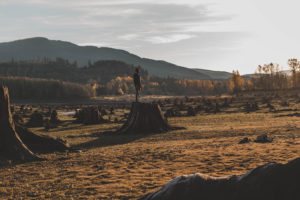
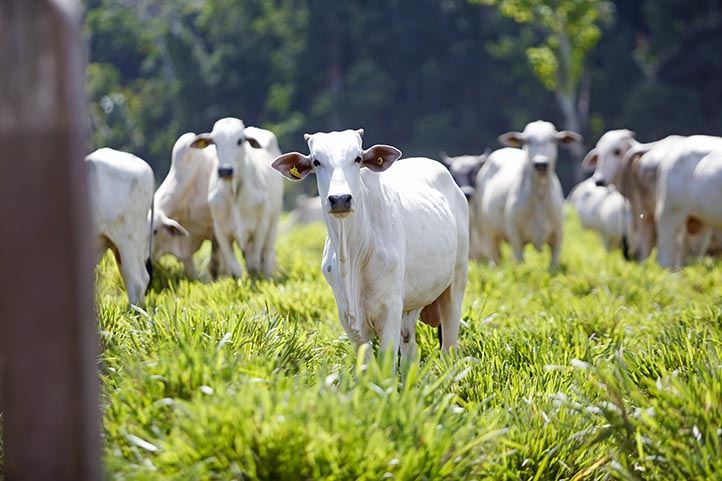
Beef farming and large-scale dairy production are the primary drivers of deforestation in tropical regions. Ironically, as home of the largest tropical rainforest and freshwater source on Earth, Brazil is the world’s largest beef exporter, with the largest commercial cattle herd, having converted nearly 20% of original forests into pastures over the last 4 decades in the Amazon, which is one of Earth’s ecological tipping points.   

Although some commitments have been put in place to counter this process, such as the ZDC (Zero Deforestation Commitment) and the TAC (Term of Adjustment of Conduct), aiming to target the major meat commodity industries in Brazil, it is unclear whether these initiatives have been successful. Still, JBS – the biggest meat exporter in the world – aims to convince governments and the public that their business is “climate-friendly” through a series of greenwashing data to be presented at the international event. 

Canada is not blameless in this regard. According to the Brazilian Ministry of Agriculture and Livestock, in 2023 the Canadian government imported 8 megatonnes of Brazilian cooked beef, marking an 18% increase over 2022; and has recently resumed raw beef importation produced in Amazonian states, contributing to the devastation of the rainforest. Other large world powers such as China, the U.S. and the European Union also import enormous quantities of Brazilian beef, as documented in the 2025 report released by the Brazilian Association of Meat Exporters Industries.

Apart from deforestation, livestock production accounts for approximately 19.6% of anthropogenic greenhouse gas emissions globally. In Canada, the agriculture sector is responsible for 12% of total greenhouse gas emissions of which at least 62% is derived from the production of meat, eggs and dairy, as well as crop fertilizers for corn and soymeal (a by-product from soy widely used to feed farmed animals, such as poultry and pork). This means if Canadians were to opt-out from meat consumption by shifting to a plant-based diet, we could dramatically reduce our GHG emissions. 

As host of COP30, Brazil will need to demonstrate moral leadership by confronting the main drivers of the environmental crisis, while strengthening climate adaptation, mandating land restoration and improving food security via the promotion of plant-based foods.  The current climate change reality must also be an invitation for individuals to act: to rethink their personal choices and to pressure their governments to phase out animal agriculture and the use of fossil fuels, while promoting large-scale sustainable solutions that prioritize people and the planet.

Share
Avatar photo

About Fernanda Lima

Fernanda is originally from Brazil and became a Canadian citizen in 2025. Since little, she always felt a strong connection with nature and all living creatures, which led her to a plant-based lifestyle in 2015. She holds a Bachelor’s Degree in Oceanography, and currently works in the environmental non-profit sector. Fernanda joined EarthSave in 2024 and is deeply passionate about sharing her compassion for animals, as well as her commitment with justice, equity and diversity values.

You also might be interested in

Dairy or Beef? Which is worse?

Dairy or Beef? Which is worse?

May 12, 2016

It seems obvious enough. If you’re concerned about cows, dairy’s[...]

Insights from the nudge unit

Insights from the nudge unit

Nov 9, 2021

A document mistakenly made public from the UK’s Nudge Unit outlines considerations for making impactful policy changes to address climate change. It includes a review of policies designed to nudge people towards more plant-based food options.

New science shows immense promise for rescuing ourselves

New science shows immense promise for rescuing ourselves

Oct 21, 2020

The authors find that widespread adoption of vegan diets would be – again, by far – the most effective approach.

Recent Posts

  • 2025 State of the Climate Report: A dire reality that we CAN turn around!
  • COP 30: The impacts of animal agriculture on the climate
  • Meat industry influence may lead to biased conclusions in nutrition studies
  • How can we continue to honour our planet after Earth Month?

Follow us

If you found this helpful please consider donating.

Donate

Engage with us on facebook

Earthsave Canada

12 hours 15 minutes ago

Whatever our political leanings, we'd all do far better if we relied on facts to much greater extent than we generally do. “Perceived environmental impact

Conservatives underestimate the environmental impact of sustainable behaviors compared to liberals

A new study reveals that conservatives tend to view sustainable actions as less impactful than liberals do. This divide is driven by how uncommon these eco-friendly behaviors appear to be within their own political circles.

View on Facebook
Share

Earthsave Canada

15 hours 11 minutes ago

"Modern interpretations of ancient diets often favor meat-centric approaches, based on the assumption that it aligns with our evolutionary past. However, the new study from

If You Eat Paleo, You’ve Been Doing It Wrong. Turns Out, They Were More Like Blue Zoners

Research shows that you might be doing the Paleo diet all wrong if you’re not eating mostly plants.

View on Facebook
Share

Earthsave Canada

18 hours 24 seconds ago

"In an open letter to the US Health Secretary Robert F Kennedy Junior, known as RFK Jr, and Department of Agriculture Secretary Brooke L Rollins,

Over 200 Doctors And Nutrition Researchers Call For Science-Based Dietary Guidelines

Hundreds of doctors and nutrition researchers have called for a return to science-based recommendations in US dietary guidelines

View on Facebook
Share

© 2026 · Earthsave Canada.