• Why Plant-Based?
    • Overview
    • Sustainability
    • Better health
    • Compassion for animals
  • Resources
    • Virtual speaker series
    • Speakers program
    • Pamphlets
    • Newsletters
  • Blog
  • About Us
    • Who we are
    • Contact us
  • How to Help
    • Join us
    • Donate
  • Subscribe to Newsletter
Earthsave CanadaEarthsave Canada
  • Why Plant-Based?
    • Overview
    • Sustainability
    • Better health
    • Compassion for animals
  • Resources
    • Virtual speaker series
    • Speakers program
    • Pamphlets
    • Newsletters
  • Blog
  • About Us
    • Who we are
    • Contact us
  • How to Help
    • Join us
    • Donate
  • Subscribe to Newsletter

Estimating the True Costs of Our Foods

Estimating the True Costs of Our Foods

Estimating the True Costs of Our Foods

March 2, 2025 Posted by David Steele

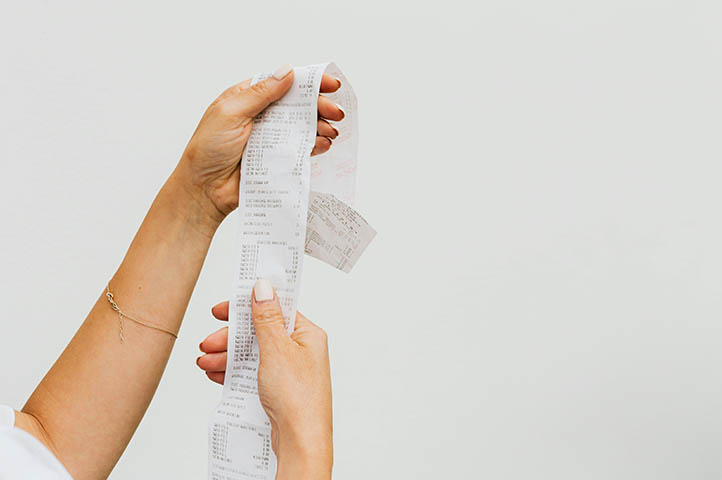
It may surprise you, but the prices we pay at checkout for our foods are often quite different from the actual prices we pay for them as a society. Some of those costs are paid by governments in the form of subsidies for commodity crops or animal feed; others we pay more indirectly as medical expenses, as the costs of cleaning up water pollution, or of mitigating the damage done by global warming, for example.

The New York Times recently published an accounting of some of these hidden environmental costs in our foods. Partnering with True Price, a Dutch non-profit, they compared the sticker prices of five common grocery items to the estimated total cost of those items when greenhouse gas emissions, water usage and the effects of land use on, especially, biodiversity are factored in. Notably, they did not attempt to estimate the medical costs or benefits of the consumption of the various foods. Thus, their estimates are very probably low for foods known to be associated with health problems, high for others known to reduce risk for such problems.

We’ve taken the liberty of adapting the NY Times’ analysis to Canadian prices, expressed in Canadian dollars. Advertised prices at a Real Canadian Superstore in the Vancouver area were used as the sticker prices; the further environmental costs of the foods were arrived at by simply converting the NY Times’ published values to Canadian dollars.

Here are the results:

Food ItemSticker Price per poundEstimated Environmental CostTotal Price
Ground beef (medium fat)$6.49$29.95$36.44/lb
Cheddar Cheese (medium)$7.93$5.11$13.04/lb
Chicken ‘drumsticks’$4.49$2.49$6.98/lb
Tofu (medium firm)$2.79$0.29$3.08/lb
Chickpeas$1.51$1.10$2.61/lb

As is blatantly obvious from the table above, the actual costs of animal products to society are far higher than the prices the consumer pays at checkout. This is mostly due to the gross inefficiency of feeding farmed animals plants instead of growing plants for direct human consumption.

For every 100 grams of protein we get from beef, for example, 2500 grams of protein were consumed by the cattle. It takes an enormous amount of land to provide that protein to the animals – land that might otherwise be allowed to return to the wild; land that could be removing carbon dioxide from the air, that could be allowing biodiversity to increase. Contrast that to tofu, the production of which we could scale up very, very quickly were we to stop feeding soy to cattle and chickens instead.

As is very clear from the numbers presented here, the true prices of animal products are prohibitively high in the long run. We may not be paying them at the checkout counter, but we’re sure paying for them in other ways. It would be dramatically better were we not incurring those environmental costs in the first place. If we choose to prioritize plant-based foods in our society, we can accomplish precisely that.

Share
Avatar photo

About David Steele

David is a molecular biologist retired in 2013 from the Faculty of Medicine at the University of British Columbia. He has also held faculty positions at Cornell and Queen’s Universities. Dr. Steele is a frequent public speaker and a regular contributor to Earthsave Canada's publications. He is also an occasional contributor to various other publications.

You also might be interested in

Confronting climate change: Those of us who understand must lead by example

Confronting climate change: Those of us who understand must lead by example

Dec 10, 2019

Global warming is accelerating and we’re shockingly ill-equipped to stop it. Unless we act powerfully and quickly, we face catastrophe on a scale humanity has never seen. So, what are we going to do?

Diet change is blind spot for climate change

May 2, 2016

CAFOs, or Concentrated Animal Feeding Operation.  Over 168 gases are[...]

We’ve outgrown omnivorism

We’ve outgrown omnivorism

May 10, 2016

By David Steele and Denise Swanson Many question whether humans[...]

Recent Posts

  • 2025 State of the Climate Report: A dire reality that we CAN turn around!
  • COP 30: The impacts of animal agriculture on the climate
  • Meat industry influence may lead to biased conclusions in nutrition studies
  • How can we continue to honour our planet after Earth Month?

Follow us

If you found this helpful please consider donating.

Donate

Engage with us on facebook

Earthsave Canada

2 hours 13 minutes ago

Sadly, when it comes to plant-based foods, none is more damaging than coconut oil. It's even worse than palm oil.

Coconut oil, conservation and the conscientious consumer

Conscientious consumption of agricultural products is hindered by a lack of objective guidance and a distorted public discourse. Meijaard et al. use the environmental impacts of coconut production to illustrate the need for improved measures that facilitate fair and transparent comparisons among pro...

1
View on Facebook
Share
Earthsave Canada

Earthsave Canada

4 hours 58 minutes ago

Learn more and view the full slide show at www.instagram.com/p/DVjKkgzlHzn/

1
View on Facebook
Share
Earthsave Canada

Earthsave Canada

7 hours 49 minutes ago

Dairy is based on horrors. "Revelations of cruelty to dairy cows and their babies have emerged in investigation after investigation into dairy farms of all

3
View on Facebook
Share

© 2026 · Earthsave Canada.