In his new book, How to Avoid a Climate Disaster: The Solutions We Have and the Breakthroughs We Need, Bill Gates outlines a plan for the world to get to net zero greenhouse gas emissions.
He makes a strong case for why getting to zero, rather than merely reducing emissions, must be the urgent goal, since the more emissions we generate, the more the world’s temperature will increase:
Here’s an analogy that’s especially helpful: The climate is like a bathtub that’s slowly filling up with water. Even if we slow the flow of water to a trickle, the tub will eventually fill up and water will come spilling out onto the floor. That’s the disaster we have to prevent. Setting a goal to only reduce our emissions—but not eliminate them—won’t do it. The only sensible goal is zero.
The book emphasizes how hard it will be to get to zero, given that currently, human activity adds about fifty-one billion (51,000,000,000) tons of greenhouse gases to the atmosphere per year. Gates breaks this down into five key categories, with their respective contributions to global greenhouse gas emissions as follows1:
- Making things (cement, steel, plastic): 31%
- Plugging in (electricity): 27%
- Growing things (plants, animals): 19%
- Getting around (planes, trucks, cargo ships): 16%
- Keeping warm and cool (heating, cooling, refrigeration): 7%
Gates explains that getting to zero means achieving net zero emissions in all of these categories. For each, Gates reviews the existing technologies that we could deploy now to eliminate emissions, and the areas where new innovations in technology will be needed because existing solutions are too expensive.
In the chapter on “How We Grow Things”, Gates admits that a love for cheeseburgers runs in his family – but this doesn’t stop him from emphasizing meat and dairy as the main culprits for emissions in the agricultural sector. He acknowledges that if we keep producing food the way we do now, it will be a disaster for the climate, given that the global population is expected to reach 10 billion by 2050, and as people become richer, the demand for meat and dairy products increases.
The main problem, as Gates bluntly describes it, is “cow burps and pig manure”:
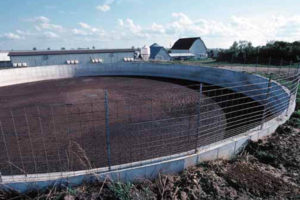
Around the world there are roughly a billion cattle raised for beef and dairy. The methane they burp and fart out every year has the same warming effect as 2 billion tons of carbon dioxide, accounting for about 4 percent of all global emissions. Burping and farting natural gas is a problem that’s unique to cows and other ruminants … But there’s another cause of greenhouse gas emissions that’s common to every animal: poop. When poop decomposes, it releases a mix of powerful greenhouse gases, mostly nitrous oxide, plus some methane, sulphur, and ammonia. About half of poop-related emissions come from pig manure, and the rest from cow manure. There’s so much animal poop that it’s actually the second biggest cause of emissions in agriculture, behind enteric fermentation.
He also addresses the fact that raising animals contributes substantially to deforestation, as forests are cleared so the land can be used for grazing:
In Brazil … most of the destruction of the Amazon rainforest in the past few decades has been to clear pasture land for cattle. Brazil’s forests have shrunk by 10% since 1990. And because food is a global commodity, what’s consumed in one country can cause land use changes in another. As the world eats more meat, it accelerates the deforestation in Latin America – more burgers anywhere mean fewer trees there. And all these emissions add up fast. One study by the World Resources Institute found that if you account for land use changes, the American-style diet is responsible for almost as many emissions as all the energy Americans use in generating electricity, manufacturing, transportation, and buildings.
In terms of a solution though, Gates gives short shrift to veganism:
A hardcore vegan might propose another solution: instead of trying all these ways of reducing emissions, we should just stop raising livestock. I can see the appeal of that argument, but I don’t think it’s realistic. For one thing, meat plays too important a role in human culture.
He notes that in many parts of the world, eating meat is a crucial part of festivals and celebrations. He cites, as his sole example of this, the importance of the gastronomic meal in France.
He does go on to recognize, however, that plant-based meat has made it possible to significantly cut down on emissions while still enjoying the taste of meat. Gates himself has invested in plant based meat companies Beyond Meat and Impossible Foods and considers these products convincing substitutes for ground beef which have enormous environmental benefits:
And all of the [plant-based] alternatives out there are better for the environment because they use much less land and water, and are responsible for fewer emissions. You also need less grain to produce them, reducing the pressure on food crops and use of fertilizers too.
Despite the focus of the book being on reducing emissions, he also gives a nod to the ethical benefit of a switch to plant-based foods, noting that “it’s a huge boon for animal welfare whenever fewer livestock are being kept in small cages.”
Gates is optimistic that plant-based meat will eventually be cheaper than animal meat. For him, the big question comes down to taste rather than money: will enough people like plant-based meat enough to switch, and will enough people switch to make a significant difference?2
He admits that even he has been surprised by how well Beyond Meat and Impossible Foods have done in the market.
Given the compelling information he presents about the growing environmental disaster that is animal agriculture, and the very promising success of plant-based alternatives so far, it is unfortunate that he frames veganism as “hardcore” and unrealistic. Compared to all of the various challenges addressed in the book – including in areas requiring currently non-existent scientific breakthroughs – veganism should be viewed as one of the easiest to achieve and most sensible changes humanity will need to make in order to avoid the impending climate disaster. This is especially so when we consider the other significant benefits of a large-scale switch to a plant-based diet: a substantial reduction in human diseases, and a stop to the horrifically cruel practices of animal agriculture that cause suffering and loss of life on an unimaginable scale.
And given his message that we must get to zero, rather than just reduce emissions, it’s not clear why he doesn’t take abolishing animal agriculture more seriously, instead focussing on how we might reduce emissions from raising animals for food.
Gates’ limited view of the role of plant-based foods is likely caused, in part, by not having tried a plant-based diet himself (though he says he has reduced his consumption of animal products significantly). Anyone who has been a vegan for a while knows two things:
- Going vegan does not mean the end of food-related culture and family traditions. With a little creativity, even the most meat-centric occasions, like the traditional turkey dinner for Thanksgiving in North America, can be transformed into equally enjoyable vegan events. It may surprise you, but vegan meals can be just as rich, filling, decadent, and true to tradition as your typical turkey dinner. And while animal products often play a symbolic role in certain traditions, the real meaning and joy of a family dinner comes more from eating great food with loved ones than the details of exactly what’s on the dinner table. It turns out not to matter much how precisely you can mimic the taste of a particular animal product, as long as you capture the overall feel of the event. In light of this, Gates’ concern that animal products are essential for certain cultural traditions is overblown.
- Switching to a plant-based diet is not just about replacing all of your usual animal foods with direct plant-based analogues, like swapping Beyond Meat for ground beef. Plant-based meats are an important part of the picture because they are convenient, delicious, and accessible, but there’s a whole world of plant-based foods out there that non-vegans are often missing out on. The focus on how well a plant-based analogue like an Impossible burger replicates a beef burger will likely decrease in importance over time, as people experience the greater variety of plant-based meals available and learn that eating plant-based is more likely to increase, rather than decrease, one’s enjoyment of food.
How to Avoid a Climate Disaster presents an honest assessment of animal agriculture’s disastrous role in causing environmental destruction, and encourages readers to decrease their consumption of animal products. Gates should be applauded for this, since the issue is often overlooked or perhaps even intentionally ignored in discussions about climate change.
Hopefully, Gates’ views will evolve as the explosion in popularity of plant-based diets worldwide continues, and he will recognize that veganism is necessary if we are serious about getting to zero. If he were to present being vegan as a doable – even enjoyable – way of living and a necessary step to combat climate change, the impact could be enormous.
[1] More information may be found at Breakthrough Energy, an organization founded by Gates and a coalition of private investors concerned about the impacts of accelerating climate change, to support the innovations that will lead the world to net zero emissions.
[2] He also briefly considers “lab-grown” meat – that is, actual animal meat cultivated in a lab using cells taken from an animal. Gates is less optimistic about this option, because it’s very expensive and it’s not clear how much the costs can come down.
Photo by Vinicius Löw on Unsplash