
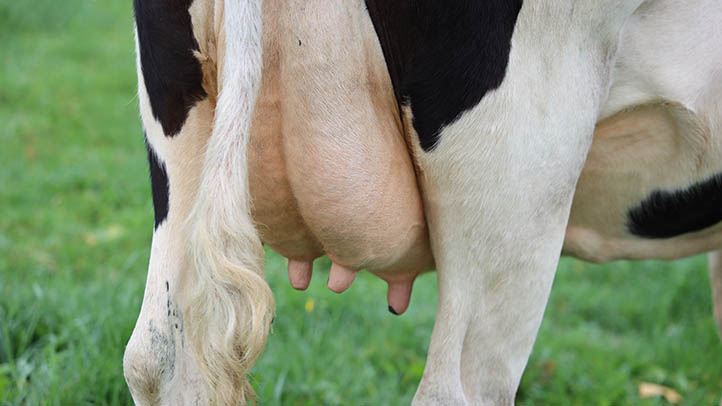
Not long ago, the Journal of the American Medical Association’s pediatrics journal, JAMA Pediatrics, published an editorial that might surprise you. The authors, Dr. David Ludwig and Dr. Walter Willett – both of them physicians and professors at the Harvard Medical School – strongly questioned the consumption of cows’ milk.
“Dairy milk evolved to promote the growth of grazing animals at high risk for predation when small,” Ludwig and Willett (one of the world’s foremost nutritional epidemiologists) wrote. “The consequences of lifetime human exposure to the growth factors in milk have not been well studied,” they continued. “Milk consumption increases serum concentrations of insulin-like growth factor 1, an anabolic hormone linked to prostate and other cancers. In addition, modern industrial methods maintain dairy cows in active milk production throughout successive pregnancies, resulting in a milk supply with high levels of reproductive hormones.”
The Harvard scientists cited a large body of research to support their claims. Adequate calcium, they pointed out, is easily obtained from other sources. They noted that a huge, recent meta-study found that dairy consumption is not protective against bone fractures in adults and that it is strongly correlated with prostate cancer. As Drs. Ludwig and Willett say, those of us eating high quality diets would likely do better getting our calcium and other nutrients from diets that include generous amounts of green leafy vegetables, legumes, nuts, seeds and adequate protein.
None of this is news scientifically. That this advice appeared in one of the world’s preeminent pediatrics journals highlights its importance.
Safeguarding personal health, of course, is not the only good reason to avoid dairy products.
All cattle, whether raised for dairy or beef, are major contributors to global warming. This is mainly due to the methane they belch – a greenhouse gas at least 23 times stronger than carbon dioxide. Cows also produce a lot of manure – more than two cubic feet of the stuff a day, according to the BC Ministry of Agriculture and Food. Besides polluting our waterways and sometimes our drinking water (remember Walkerton?), this manure emits enormous amounts of ammonia. Indeed, the majority of all ammonia pollution comes from manure. Much of this becomes nitrous oxide in the atmosphere, a greenhouse gas which, at 300 times the potency of CO2, dwarfs even methane in its global warming impact.
And then, there’s the plight of the cattle themselves. More and more dairy cows live on factory farms where enormous numbers of them are packed into very small spaces. Mercy for Animals Canada’s recent exposé documented egregious abuse on a BC “dairy farm” that has 3500 cows (see sidebar).
Like humans, cows have to give birth in order to produce milk. So, the cows are artificially inseminated once each year. Nine months later, a calf is born. Almost always, the calf is promptly taken away from its mother after just 24 to 48 hours. This permanent separation causes great emotional pain for both mother and child. Former cattle rancher Helen Weston describes how the mothers react: “The cow is an exceptionally loving and gentle creature. She cries for days when her calf is taken from her. It is a pitiful sound, a pitiful sound.”
After being separated from her mother, a female calf is usually allowed to live. She’ll be raised to be a dairy cow herself. If the calf is male, however, he may well be quickly killed. His meat will be sold as “bob veal.” Or he may be raised for beef. More likely, though, he’ll be sent to a veal farm instead. At the veal farm, he’ll probably be fed an iron-deficient gruel so that the meat will be pale. He’ll likely be isolated in his own pen or shelter, with no chance to even touch another calf. Odds are high that he’ll be subjected to even worse cruelty. Mercy for Animals has recently documented that as well (see sidebar).
At 16 weeks of age, he will be sent to slaughter. According to the Humane Society of the United States, the veal industry would not exist were it not for these “surplus” (i. e., male) dairy calves. If you find this disturbing, you’re supporting of it every time you eat dairy foods.
Modern dairy cows are bred to produce unnaturally high amounts of milk, more than twice what cows produced in the 1940s. A bitter irony is that cows today routinely suffer from calcium deficiencies and painful mastitis (swollen, infected teats) due to this gruelling milking schedule and the harsh, modern milking machinery. And while their natural lives would span some 25 years, the cows are “spent” and sent to slaughter before their fifth birthday. There they become hamburger and cheap processed beef products.
We don’t need dairy. It does a great deal more harm than good. So, eat like the doctors from Harvard suggest. Adopt a high quality diet filled with beans and grains and leafy greens and nuts and seeds. Your body will be better off. The world will be better off. And fewer cows and calves will suffer so.
***
Dairy Without the Cows
Today’s plant-based substitutes are simply delicious
You don’t need dairy. You can leave it behind and (almost) not even notice. There’s soy milk and almond milk and rice milk and hemp milk. Most commercial varieties are supplemented with calcium, vitamin B12 and (like cow’s milk) vitamin D. Soy and hemp milk are high in protein, too.
It’s easy to find dairy substitutes – milk, cheese, ice cream – that are organic and GMO-free.
For cheese, there is Daiya (a popular Canadian brand) for cheddar and mozarrella and pepperjack — and even cream cheese. Tofutti makes very tasty American-style slices.There is vegan parmesan, too! Parma! Is a delectable blend of organic walnuts, nutritional yeast and hemp seeds that has to be tasted to be believed.
Do check labels to avoid the few cheese substitutes that use whey – a milk protein – as a major ingredient.
Finally, ice cream – oh, ice cream! There’s So Delicious, So Good, Coconut Bliss and many more brands in many, many flavours. So much variety, and they’re all so delicious!
Photo by Megumi Nachev on Unsplash